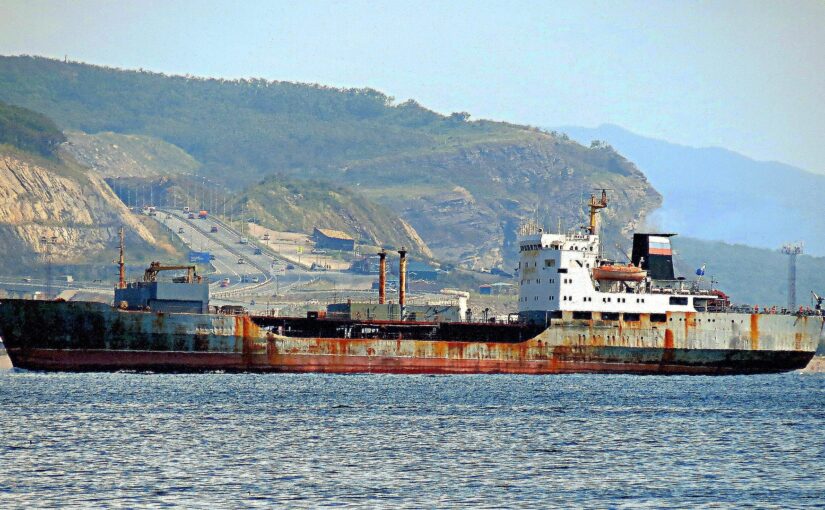
Global shipping tends to look simple on a purchase order. A company buys goods from a supplier, agrees on a delivery schedule and expects the products to appear at its warehouse several weeks later. The physical journey is considerably less tidy. Cargo can move through factories, consolidation warehouses, ports, airports and inland terminals before reaching its destination, with different companies responsible for individual stages. International freight forwarding brings those stages together and gives businesses a practical way to manage transportation across countries without coordinating every carrier independently. https://www.arijus.lt/en/services/international-freight-forwarding-services
International freight forwarding becomes even more valuable when supply chains are exposed to change. A planned sailing can move, a supplier can finish production late, capacity on a preferred route may become tight or customer demand can suddenly increase. None of these situations is particularly unusual in global trade. The objective is therefore not to create a transport plan in which nothing ever goes wrong, but to build one with enough visibility and alternatives to keep ordinary disruption from becoming a major business problem.
The cargo journey begins at the supplier
Companies often think of freight from the moment a container reaches the port or a shipment is handed to an airline. In reality, an important part of the process happens before the main transport leg starts. The supplier needs to finish production, prepare the cargo, provide accurate shipment details and make the goods available for collection.
A delay at this stage can affect everything that follows. If a factory expected to have a container ready on Monday but finishes on Thursday, the original departure may no longer be realistic. Missing one connection can add considerably more than three days to the final arrival date.
For regular shipments, supplier coordination therefore deserves attention. Freight forwarders may communicate with origin partners and suppliers about cargo readiness, pickup arrangements and required shipping information. The smoother this exchange becomes, the less time is spent chasing basic details shortly before departure.
A reliable route is not necessarily the shortest route
Transit time attracts attention because it is easy to compare. One service is advertised at a certain number of days, another appears slightly faster. The obvious choice seems to be the shorter option.
Businesses moving regular cargo eventually learn that consistency matters as well. A route that performs within a relatively predictable window can be easier to plan around than one with an attractive theoretical transit time but significant variation.
This matters because inventory planning depends on expected arrivals. Purchasing teams decide when to reorder, warehouses plan inbound capacity and sales teams may make commitments based on stock availability. A few days of predictable additional transit can sometimes be easier to manage than repeated unexpected delays.
The right route therefore depends on more than speed. Frequency, connections, available capacity, origin and destination arrangements and the importance of the cargo all influence the decision.
Alternative routes are useful before they are urgently needed
Businesses often examine backup logistics options only after their normal route has been disrupted. By then many other shippers may be doing exactly the same thing.
A more resilient approach is to understand alternatives during normal operations. Could the cargo use another port? Is air freight realistic for a limited quantity? Can a different European gateway or inland transport arrangement be used? Does another service operate on the same trade lane?
Not every business needs several active routes at all times. Maintaining unnecessary complexity can create its own costs. Still, knowing the realistic alternatives reduces the amount of research required when the normal plan becomes unavailable.
For critical products, this can be particularly valuable. The company does not need to invent a new supply chain during an urgent shortage because at least some options have already been considered.
Freight consolidation can solve one problem and create another
Smaller shipments can sometimes be consolidated rather than moved independently. This can improve transport economics, particularly when several suppliers operate within the same region or cargo volumes do not justify separate full-container movements.
The benefit is straightforward: combining freight can reduce inefficient use of transport capacity. The operational side is less straightforward. If cargo from three suppliers is being combined, their production schedules need to align reasonably well.
Suppose two factories finish on time while the third needs another week. Waiting may improve freight efficiency but delay products that are already available. Shipping without the third supplier preserves the schedule but reduces the value of consolidation.
There is no universal answer. The correct decision depends on inventory levels, margins and how urgently each product is needed. Freight optimization without inventory context can easily produce savings in one spreadsheet and problems somewhere else.
Multimodal transport gives businesses more combinations
International freight does not have to fit neatly into categories of “sea”, “air” or “road”. Many shipments already use several transport modes during their journey, even if the customer mainly thinks about the longest segment.
More deliberate multimodal strategies can also be considered. Rail, road, sea and air services can be combined depending on available routes, geography and commercial requirements. The value is not simply having more transport terminology on a quotation. Different combinations create different balances between cost, speed and flexibility.
This is particularly relevant when a company serves several markets from one distribution point. The main international movement is only part of the problem. Cargo still needs to reach the warehouse and later move onward to customers.
A freight plan should therefore make sense door to door, not merely between two major terminals.
The cheapest booking can hide expensive waiting
A low freight rate naturally looks attractive. Problems begin when businesses compare the visible transport price but ignore the cost of cargo that stops moving.
Containerized freight can involve time-related terminal, equipment or storage charges depending on the circumstances and agreed conditions. A delay in customs documentation, an unavailable delivery slot or an unprepared warehouse can therefore become financially relevant.
This is why destination planning matters before arrival. The team should know where the cargo is going, who is responsible for the relevant formalities and when the warehouse can receive it. Leaving these decisions until a container is already available creates unnecessary pressure.
A few days of waiting can also affect inventory. If the goods are already sold or required for production, the commercial cost may be larger than the logistics charge itself.
Documents should move faster than the cargo
Physical freight can take weeks to cross an ocean. Information can travel almost instantly, which makes it frustrating when necessary documentation arrives after the goods.
Commercial documents and product information should ideally be reviewed early enough for obvious issues to be corrected without urgency. A vague description, incorrect quantity or missing detail is much easier to resolve while the shipment is still in transit than when people are waiting for the cargo to be released and delivered.
Regular importers can make this process more systematic. Suppliers receive standard instructions, documents are checked at an agreed stage and recurring product information is maintained internally.
The goal is not paperwork for its own sake. It is to make sure the administrative side of the shipment stays ahead of the physical side.
Customs and transportation operate on the same timeline
Customs formalities are sometimes treated as a separate administrative task, but operationally they sit directly inside the transport process. If required procedures are not completed at the appropriate point, cargo cannot simply continue because the truck and warehouse happen to be ready.
The forwarding and customs teams therefore need access to compatible information. Depending on the service model, customs brokerage may be handled by the forwarder, another specialist or the importer itself. What matters is that responsibilities are clear.
Regular products make this easier because the company can maintain structured product data. New goods usually deserve more attention. Waiting until the first shipment of an unfamiliar product arrives before checking what information is needed leaves very little room for correction.
A well-planned shipment treats customs readiness as one of the milestones, not as an administrative surprise at destination.
Inventory decisions determine how urgent freight becomes
Logistics teams are frequently asked to solve problems that began much earlier. Stock has fallen below expectations, the next purchase order was placed late and suddenly a shipment that was supposed to travel economically needs to arrive immediately.
At this point freight forwarding can provide alternatives, but the alternatives may be expensive. Air transport can shorten the replenishment cycle for suitable cargo, yet moving an entire large order by air may destroy the expected margin.
A common response is to prioritize. A smaller quantity travels using a faster service while the rest follows the normal route. This can bridge an inventory gap without converting the whole shipment into emergency freight.
The better solution, when possible, is avoiding the emergency in the first place. Freight lead times need to be part of purchasing decisions, particularly for goods coming from distant suppliers.
Social media demand moves faster than containers
Consumer demand has become harder to separate from online culture. A product can spend months selling at an ordinary pace and suddenly appear in a viral video. Within days, inventory assumptions that looked perfectly sensible can become outdated.
Physical logistics cannot react at the same speed. A vessel will not cross an ocean faster because an item is trending on TikTok, and a factory may not have unused production capacity waiting for a viral moment.
Businesses can still respond. Available stock can be redistributed, future orders adjusted or limited quantities moved by faster transport. The important question is whether the expected sales justify the additional logistics cost.
There is also the opposite scenario. Online attention disappears quickly, but the large replenishment order continues moving toward the warehouse. Freight forwarding provides flexibility around transportation; it cannot guarantee that today’s trend will still exist when the cargo arrives.
Visibility should focus attention on exceptions
Tracking technology has made international shipments easier to follow. Companies can monitor milestones and estimated arrival information without requesting manual updates for every movement.
The danger is replacing a lack of information with too much information. A logistics employee does not necessarily need another notification every time a shipment completes a normal step. The useful information is often the exception: something changed and the business may need to react.
If an expected arrival moves by two days but stock levels are healthy, no action may be necessary. If the same delay affects a component with only three days of inventory remaining, purchasing and production teams need to know immediately.
Good shipment visibility therefore connects logistics events with business priorities. Not every delayed shipment has the same importance.
Freight performance should be measured over time
Businesses that ship regularly accumulate useful information about their logistics even if they do not formally analyze it. They know which suppliers frequently miss cargo-ready dates, which routes tend to vary and which destinations regularly require more coordination.
Turning these observations into basic performance data can improve future decisions. Planned and actual departure dates, arrival performance and recurring operational issues provide a clearer picture than judging a provider based on the latest shipment.
This is particularly useful when comparing freight options. A service that looks slightly more expensive may deliver more consistently. Another may work well during most of the year but become less predictable during peak periods.
The goal is not to create a complicated dashboard for every container. It is to stop making repeated decisions based entirely on memory and isolated experiences.
Forwarders are most useful when they understand the business behind the cargo
Two shipments with identical dimensions can have completely different commercial importance. One may contain routine stock with several months of inventory already available. The other may carry components needed for next week’s production.
A forwarding partner that understands this context can communicate more effectively when something changes. It knows which shipments deserve immediate attention and which have enough flexibility to use a slower alternative.
That understanding usually develops through regular cooperation. The forwarder learns the company’s routes, suppliers and operational priorities, while the customer learns what information the logistics team needs in order to plan effectively.
Price still matters, and businesses should continue to review their transport costs. But once international volumes become significant, repeatedly selecting providers on rate alone can remove some of the operational knowledge built through ongoing cooperation.
International freight forwarding is increasingly about managing uncertainty
There is no transport network in which every vessel departs exactly as planned, every supplier finishes production on time and every forecast matches actual customer demand. Global supply chains contain too many independent participants for that level of certainty.
Effective international freight forwarding is therefore less about promising a perfect journey and more about creating a process that can absorb ordinary changes. Businesses need realistic lead times, clear responsibilities, useful shipment visibility and workable alternatives when the preferred plan changes.
When those elements are in place, an unexpected delay remains inconvenient, but it does not automatically become a crisis. That is often the real difference between simply shipping internationally and operating a mature global supply chain.